Rim
Rim and wheel are often used interchangeably – it is the part that the tyre sits on.
Rolling Resistance
The force required to maintain forward momentum in a straight line at a constant speed.
Run Flat Technology tyres
Run Flat Technology tyres are designed to withstand punctures, thereby allowing the driver to continue to drive even when the tyre is completely deflated. The safety benefits are that it avoids the need for drivers to stop by the side of the road to change tyres and giving drivers ample time to make it home or to the nearest tyre replacement centre, provided they drive within the accepted speed limit and safe distance.
Sidewall
The part of a tyre between the edge of the wheel and tread.
Sipes
Small slots in a tyre’s tread.
Speed Rating
The maximum speed a tyre can travel, corresponding to its load index.
Tyre
The rubber part that sits on the wheel.
Tyre Size
Tyre size is actually a set of numbers and letters that define a tyre’s specifications, such as section width (from sidewall to sidewall), aspect ratio, speed rating and diameter of the wheel the tyre is made to fit on.
Tread
The raised part of the rubber on a tyre.
Treadwear Indicator
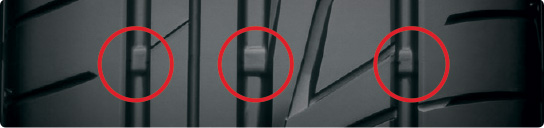
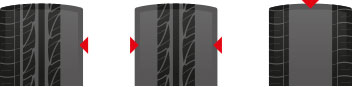
Features built into a tyre to let the driver know that the tyre is worn sufficiently to necessitate changing.
Underinflation
When a tyre is not inflated enough – it can result in a shorter lifespan and reduce fuel economy. Steering and cornering will be negatively affected and rolling resistance will be increased.
Winter Tyres
Winter tyres are specifically designed to be used on winter roads – ice, snow and water.